


Engineering Comparison Guide
Twisted Tape Inserts vs. Automatic Tube Brushing
Two fundamentally different approaches to heat exchanger performance. Which one actually delivers on its promise — and which one costs you more in the long run?
twisted tape inserts
twisted tape heat exchanger
twisted tape insert in heat exchangers
In heat exchanger optimization, engineers face a recurring choice: force better heat transfer through passive turbulence, or maintain peak efficiency through active cleaning? Both twisted tape inserts and automatic tube brushing systems aim to improve condenser performance — but they solve fundamentally different problems, and carry very different cost implications over the lifetime of your installation.
Option 01
Twisted Tape Inserts
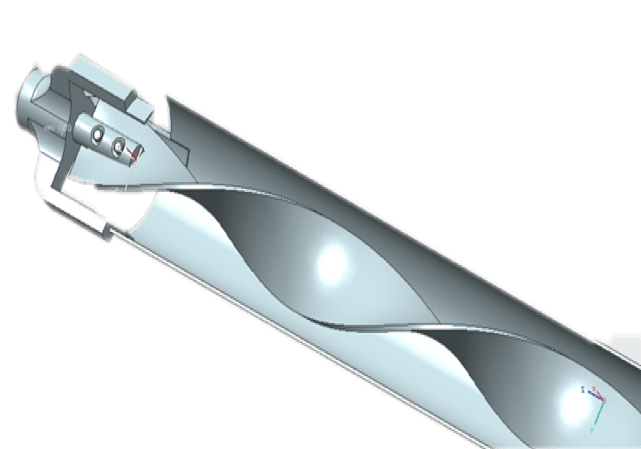
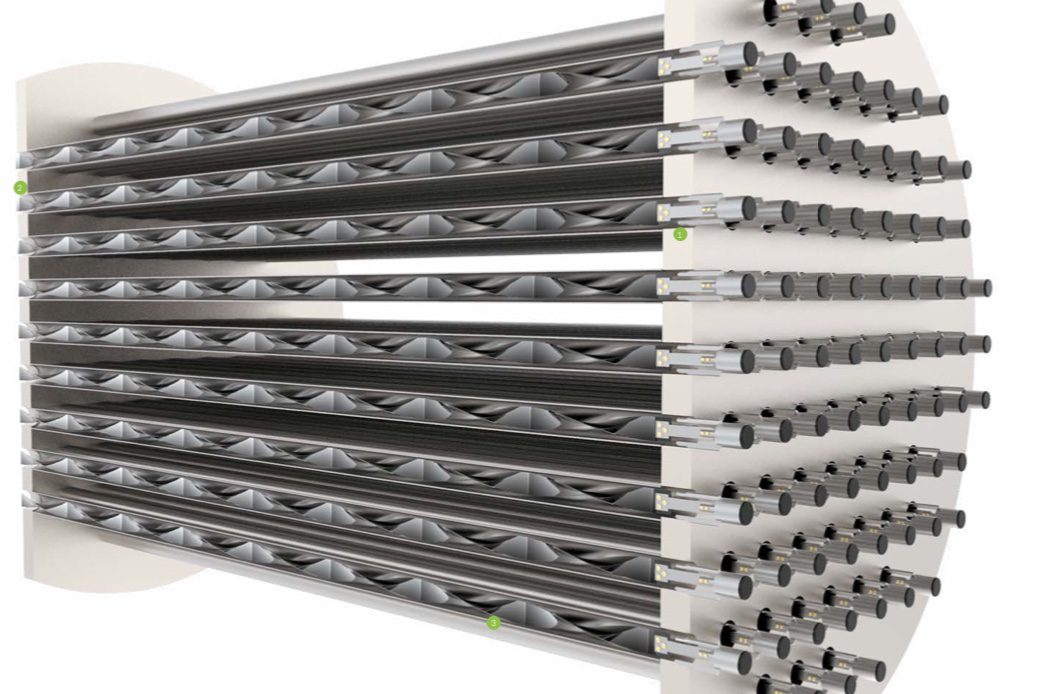
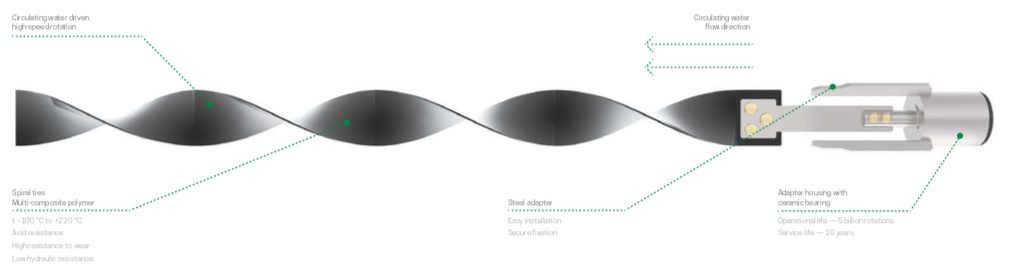
Twisted tape inserts are stationary, spiral-shaped strips — made of polymer or metal — inserted inside heat exchanger tubes. They work by converting laminar fluid flow into turbulent swirl flow, increasing the Heat Transfer Coefficient (HTC). This makes them particularly effective in high-viscosity or very low-flow applications.
The strip is slightly denser than water, allowing it to float centrally inside the tube while inducing transverse turbulence — activating both convection and conduction heat transfer modes simultaneously.
Known Engineering Limitations of Twisted Tape
Field experience and published research identify five recurring failure modes in condenser tube applications:
- Wear & Tear: Polymer spirals degrade after ~7,500 running hours. Rotation torque drops, cleaning effectiveness collapses — replacement required every 12–18 months.
- Pressure Drop (ΔP): Turbulent swirl flow increases pumping energy requirements by 100–300%. This often negates the energy savings from improved heat transfer — a critical consideration for retrofit projects.
- The Fouling Trap: Tapes act as secondary filters. Debris, scale, and bio-fouling accumulate behind the spirals, making tubes nearly impossible to clean without full teardown.
- Surface Fouling of the Tape Itself: As the tape breaks the salt retaining layer, its own surface becomes fouled — reducing rotation speed and increasing water resistance.
- Water Quality Sensitivity: Chlorine, potassium, and sodium salts accelerate scaling and corrosion — common in open cooling tower circuits. Strainer performance must be maintained at 100%.
Option 02
EQOBRUSH Automatic Tube Brushing
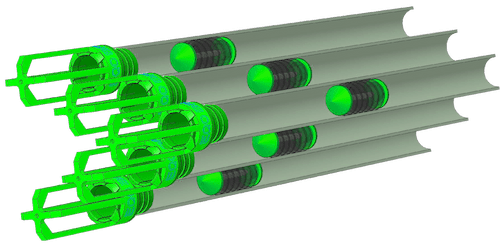
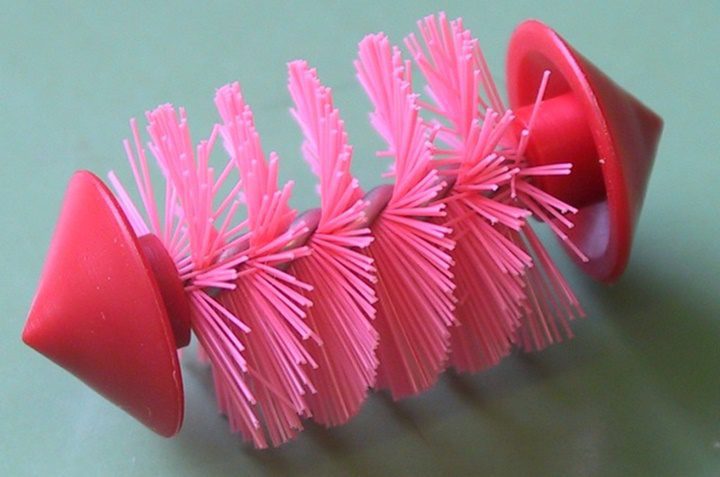
EQOBRUSH is an active, fully automated online tube cleaning system. Precision-fit brushes travel through condenser tubes and back again — driven by a flow reversal valve — continuously removing mineral deposits before they crystallize and bond to the tube wall.
The result: tubes maintained at a permanently metal-bright condition throughout the full operating cycle. No fouling factor (Rf). No degradation of the Coefficient of Performance (COP). No standstill cleaning.
The system is fully compatible with cooling tower water, seawater, and river water — exactly the conditions where twisted tape inserts struggle most.
- Tubes cleaned 24/7 during normal operation — zero downtime
- Negligible pressure drop — brushes park in catch baskets during operation
- Eliminates the fouling factor (Rf) — design COP maintained continuously
- Prevents tube corrosion and leakage — extends heat exchanger service life
- ROI typically achieved within 12–24 months through energy savings alone
- Brush replacement every 20,000 running hours — vs. tape replacement every 7,500 hrs
Side-by-Side Engineering Comparison
Passive turbulence enhancement vs. active fouling elimination — the numbers tell the story.
| Parameter | Twisted Tape Inserts | EQOBRUSH (Brush Cleaning) |
|---|---|---|
| Primary Function | Increase turbulence / HTC | Eliminate fouling (scale / bio) |
| Effect on Fouling | Can hide or accelerate fouling | Tubes 100% clean 24/7 |
| Pressure Drop | High — 100–300% pump energy increase | Negligible |
| Maintenance | Manual teardown required every 12–18 months | Fully automated — zero intervention |
| Replacement Frequency | Every ~7,500 running hours | Every ~20,000 running hours |
| 10-Year Consumable Cost (600 tubes) | USD 21,000 – 42,000 | USD 2,400 |
| Erosion Risk | High — impingement erosion on tube walls | None |
| Typical ROI | Low (pumping + cleaning costs offset gains) | 12–24 months via energy savings |
| Best Suited For | Viscous fluids / large-bore power plant condensers | Chiller & HVAC condensers, cooling tower water |
10-Year Operating Cost: A Real Example
Based on: 450 RT chiller | 270 kW compressor | 600 tubes | 5,000 operating hours/year | 10 years total
Twisted Tape — 10 yrs
$42,000
4,200 tape sets | every 7,500 hrs
Replacements every 12–18 months
EQOBRUSH — 10 yrs
$2,400
1,200 brushes | every 20,000 hrs
Replacements every 48 months
→ Consumable cost difference alone: up to USD 39,600 over 10 years. Energy savings not included.
Choose Twisted Tape Inserts ONLY if:
- You are working with highly viscous fluids (oils, heavy process fluids) where flow is naturally laminar
- The system uses closed-loop, chemically pure water with no fouling risk
- Tube diameters are too large for reversal valve application (e.g. large power plant surface condensers)
- Pumping energy cost is not a primary concern
Choose EQOBRUSH Automatic Brushing if:
- You are operating with cooling tower water, river water, or seawater
- You need a constant Chiller COP and predictable energy bills
- ROI and Total Cost of Ownership (TCO) are your primary engineering KPIs
- You want to eliminate labor-intensive periodic manual tube punching
- Your pipe diameter allows reversal valve application (up to 600 mm feed pipe)
Not Sure Which System Fits Your Installation?
Our engineers can assess your tube dimensions, water quality, and operating profile — and provide a no-obligation ROI estimate for EQOBRUSH or twisted tape technology on your specific installation.
This guide compares twisted tape inserts as a heat transfer enhancement strategy with EQOBRUSH automatic tube brushing as an active fouling elimination system. Twisted tape inserts in heat exchangers improve the Heat Transfer Coefficient through swirl flow, but carry significant trade-offs in pressure drop, fouling risk, and long-term maintenance cost when used in twisted tape heat exchangers exposed to open cooling water. For most commercial chiller and HVAC condenser applications, a twisted tape insert in heat exchangers is outperformed over a 10-year horizon by automated brush cleaning — particularly where TCO, energy efficiency, and water quality variability are key project criteria.
Technical data on this page is based on field experience, published research by Zhu Yu Jie and Liu Wei (China Academic Journal, 2013), and Watco Group engineering documentation. Watco Group recommends twisted tape technology for large-bore power plant surface condenser applications where reversal valve systems cannot be applied.