


CUSTOM ENGINEERED COOLING TOWER SOLUTIONS
When standard Cooling Tower designs do not fit your process, layout, or operating conditions, we engineer a solution that does.
- Retrofit into existing infrastructure
- Limited footprint or complex piping layout
- Process-specific cooling requirements
- Projects where standard solutions fall short
- Motor-less turbine-driven cooling (eliminatine electric fans )
For projects where engineering flexibility matters more than standardization.
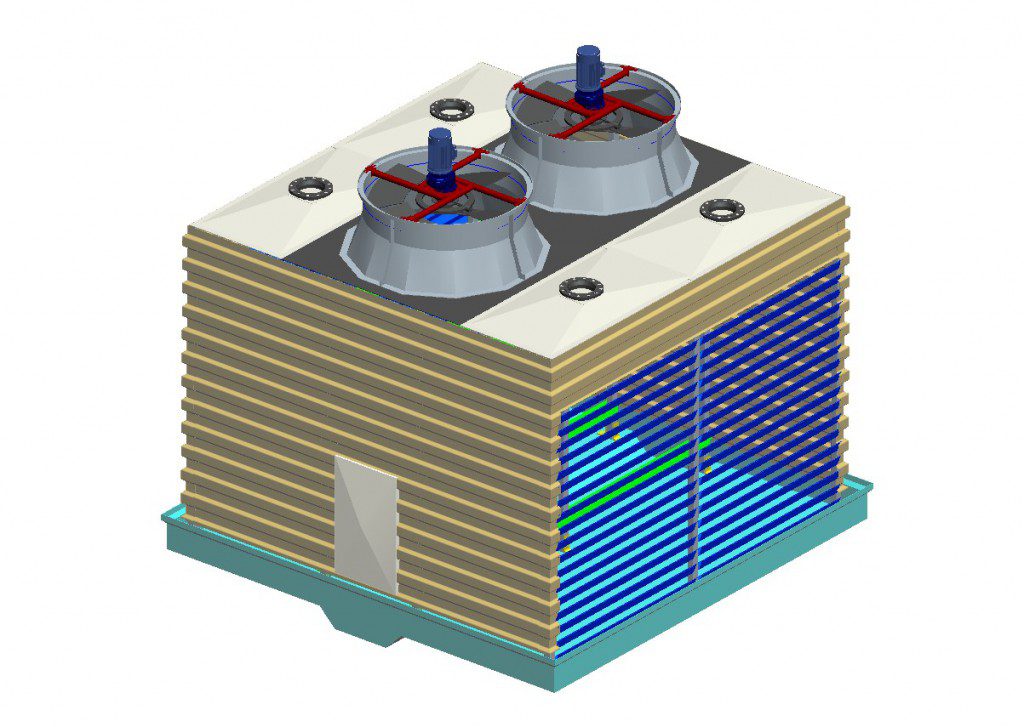
Why Standard Cooling Tower Solutions Often Fall Short:
Cooling Tower solutions that fit your conditions and constraints
Cooling tower performance is always influenced by the conditions in which the system operates.
These include factors such as available space, integration into existing infrastructure, process requirements, and variations in load or operating conditions (climate).
In many cases, these constraints define the solution — not the other way around.
A well-performing cooling solution takes these factors into account from the start:
- System layout and footprint
- Integration with existing piping and equipment
- Process-specific cooling requirements
- Operational flexibility over time
Effective cooling starts with understanding the system as a whole.
Designed for engineered cooling systems in demanding environments:
Cooling Tower Scope
Our focus is on field-erected cooling towers —
both crossflow and counterflow configurations. These systems are applied in industrial cooling environments where reliability, accessibility and long term performance matter most.
- Designed around your site layout and piping constraints
- Suitable for retrofit and new installations
- Engineered for long-term accessibility and maintenance
- Materials and configuration selected per application
- Integration with process-specific cooling requirements
We do not design or supply packaged or bottle-shaped cooling towers.
Our work is centered around systems where performance can be engineered and maintained over time.


Rethinking cooling tower operation:
Cooling Without Electric Fans
In many cooling tower installations, fan systems are a major contributor to energy consumption, maintenance, and operational complexity.
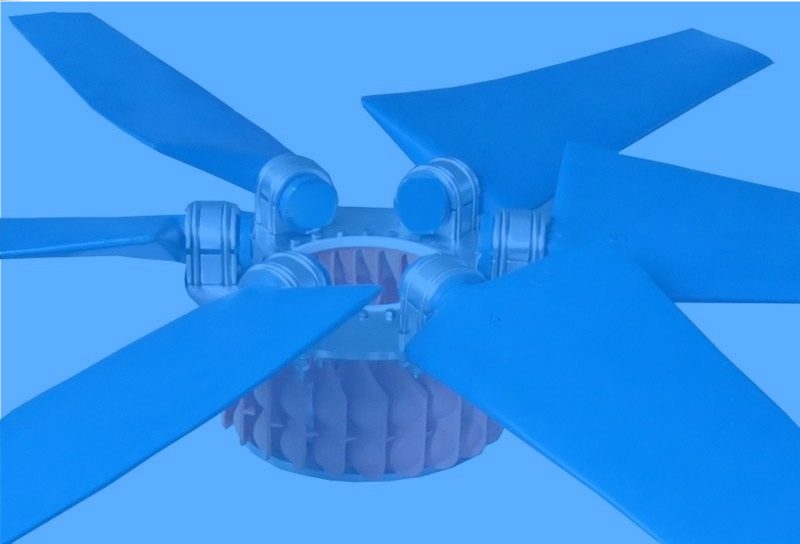
Aquafan offers an alternative approach — using a water-driven turbine (powered by the system pump) to generate airflow, eliminating the need for electric fan motors.
- No electric fan motors or gearboxes
- Reduced maintenance and fewer failure points
- Energy consumption linked directly to process conditions
- Simplified operation without complex fan control systems
This approach is particularly relevant in installations where reliability, energy efficiency, or limited electrical infrastructure play a role.
From principle to operation:
How Aquafan Generates Airflow
The Aquafan turbine is driven by the system’s water flow.
Instead of consuming electrical energy to move air, Aquafan uses the available hydraulic energy in the system.
The flow is controlled by VFD-equipped cooling water pumps, responding to cooling demand.
As flow increases, airflow increases — without external power input.
This creates a direct link between cooling demand and airflow generation.

When motor-less cooling makes sense:
Where Aquafan Works — And Where It Doesn’t
Aquafan is not a universal solution.
Its applicability depends on hydraulic conditions and cooling requirements.
Suitable applications
- Systems with sufficient hydraulic head available (≥ 2 bar at tower inlet / distribution level)
- Cooling processes focused on heat rejection rather than precise temperature control
- Installations where:
- electrical infrastructure is limited
- energy reduction is a priority
- maintenance access is challenging
Limitations
- Systems requiring tight temperature control close to wet-bulb
(e.g. approach temperatures < 4°C) such as chiller applications.

LET’S EVALUATE YOUR COOLING SYSTEM
Based on your system layout, operating conditions, and performance targets, we develop a custom-engineered cooling tower solution, addressing flow distribution, approach temperature, and system limitations in real operating conditions. Also we assess whether the Aquafan concept can add value within that design.
You receive a clear and practical recommendation
Typical response within 1–2 working days. No obligation.