Chiller Efficiency Loss: Why It Happens (and How to Prevent It)
Chiller efficiency loss is often caused by condenser fouling. Learn how performance drops over time and how to protect your investment with continuous cleaning.
Intro
Chiller efficiency loss is a well-known issue in real-world operation.
But it is often misunderstood.
Efficiency does not drop for a single reason —
it is the result of multiple interacting factors within the system.
Before deciding on solutions, the first step is simple:
Understand what is causing the efficiency loss in your system.
Table of Contents
What Causes Chiller Efficiency Loss?
Several factors can contribute to chiller efficiency loss:
- Condenser fouling (scaling, biofilm, debris)
- Evaporator performance issues
- Incorrect refrigerant charge
- Compressor wear or inefficiency
- Poor cooling tower performance
- Inadequate water flow or distribution
- Control strategy and part-load operation
In many cases, multiple factors occur at the same time.
This makes it difficult to identify the dominant cause without proper analysis.
You Cannot Fix What You Do Not Measure
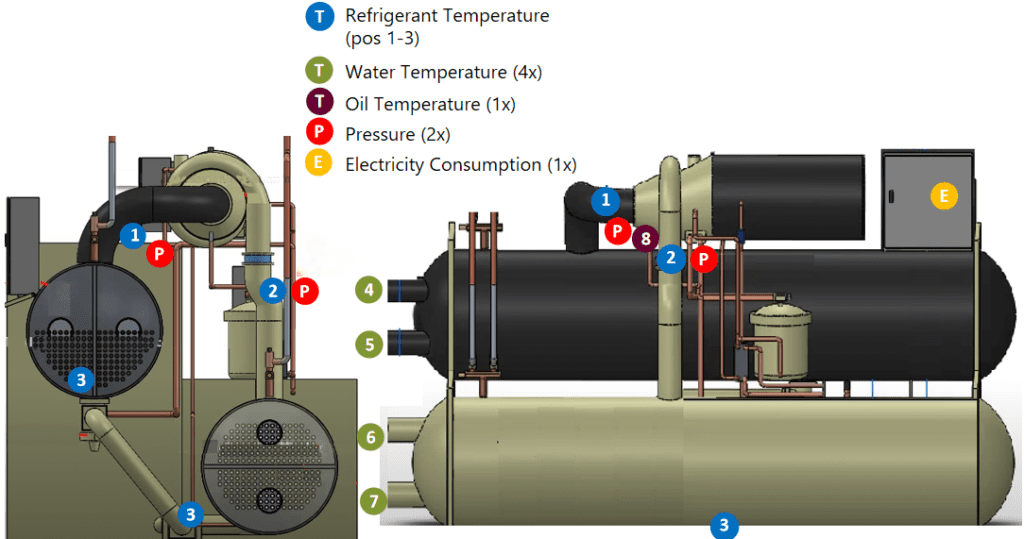
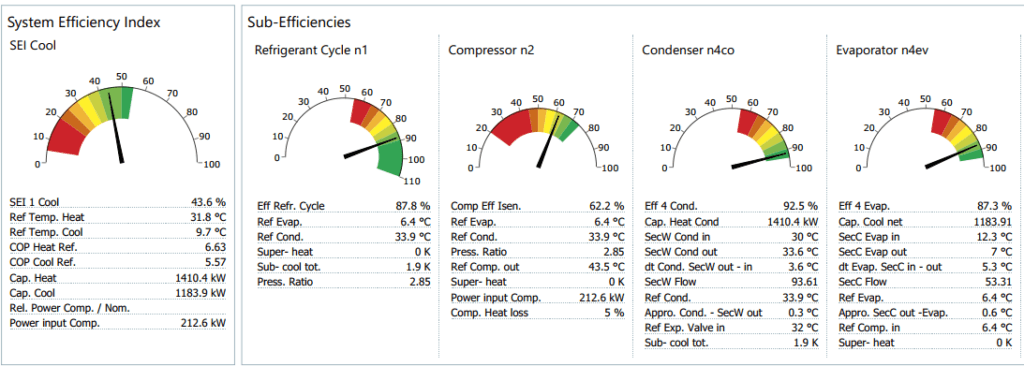
Before addressing chiller efficiency loss, it is essential to measure performance.
Without reliable data, decisions are based on assumptions.
Typical indicators include:
- Condenser and evaporator pressures
- Temperature differences
- Compressor power consumption
- Approach temperatures
Monitoring allows you to:
- Detect efficiency loss early
- Identify trends over time
- Separate symptoms from root causes
Without this step, any intervention becomes guesswork.

One Cause Stands Out in Practice
While multiple factors influence performance,
one issue appears consistently in water-cooled systems:
Condenser fouling
Unlike some other factors:
- It develops continuously
- It affects every operating hour
- It directly impacts heat transfer
And most importantly:
It is often underestimated.
How Fouling Drives Chiller Efficiency Loss
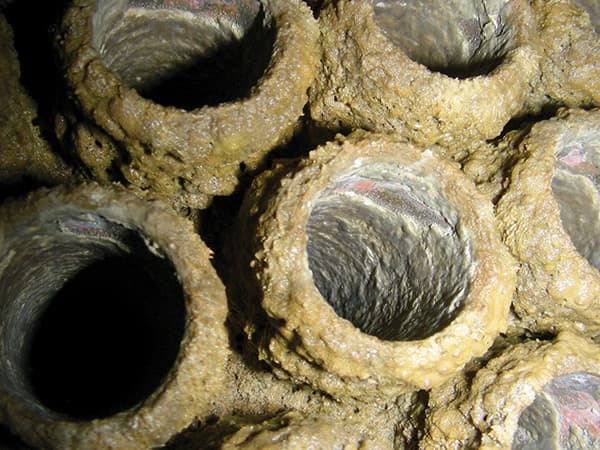
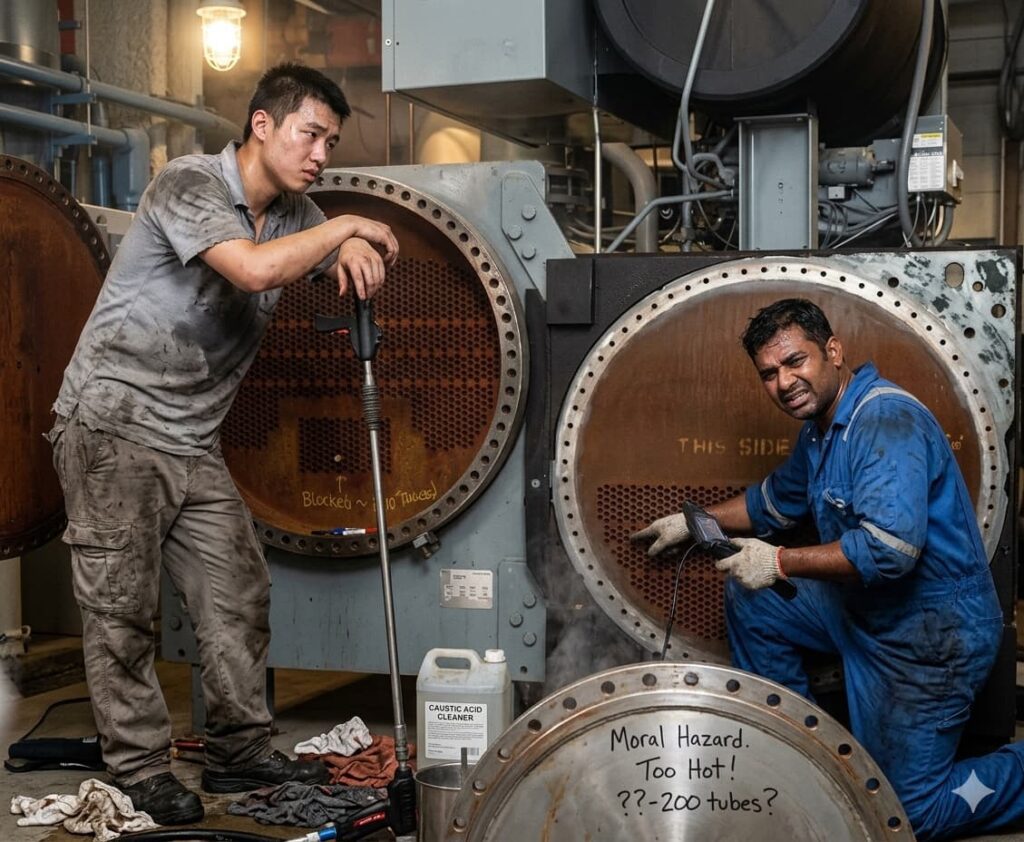
As fouling builds up inside condenser tubes:
- Heat transfer resistance increases
- Condensing temperature rises
- Compressor workload increases
This leads to:
- Higher energy consumption
- Reduced system efficiency
- Increased mechanical stress
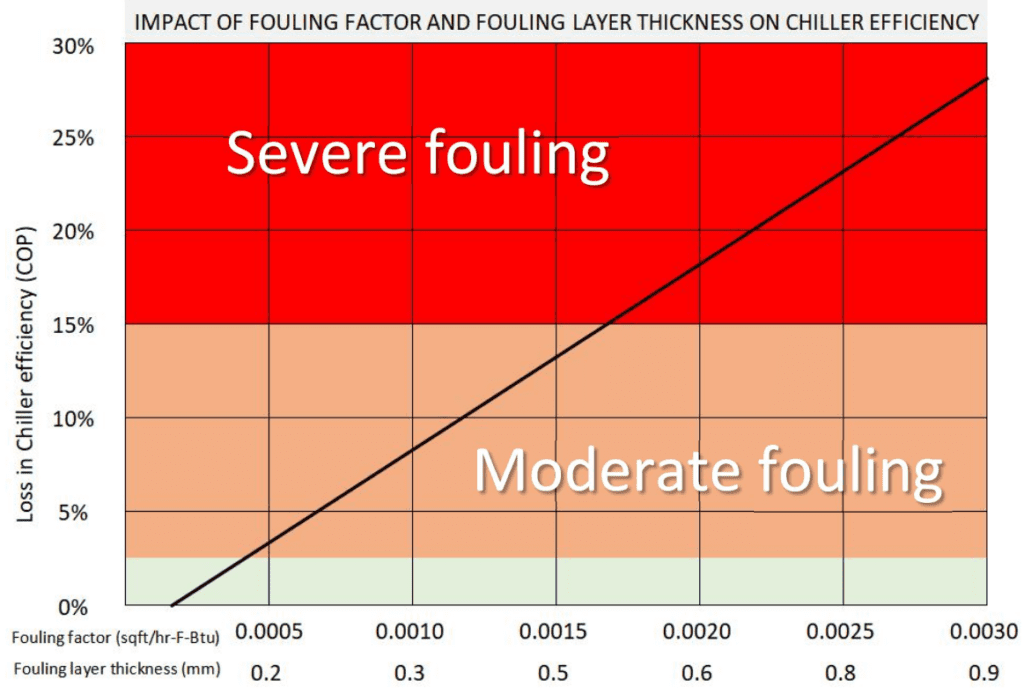
Even a relatively thin fouling layer can have a measurable impact.
The International Energy Agency estimates in their analysis of cooling systems that the total energy loss attributed to fouling may reach 2% of the world’s energy consumption.
Running a 1000 RT chiller at 10% efficiency loss?
You’re not just wasting energy.
You’re effectively burning the equivalent of a diesel truck…
seven times a year.
How Much Efficiency Loss Are We Talking About?
In practice, fouling-related chiller efficiency loss typically results in:
- 5% efficiency loss within a short period
- 10% or more in untreated systems
And this loss is:
- Continuous
- Accumulative
- Often unnoticed until it becomes significant
Why Periodic Cleaning Does Not Solve the Problem
Most systems rely on periodic cleaning.
The limitation is clear:
Fouling develops between cleaning intervals.
This means:
- Efficiency drops continuously
- Performance fluctuates
- Energy costs increase over time
Cleaning restores performance —
but only temporarily.
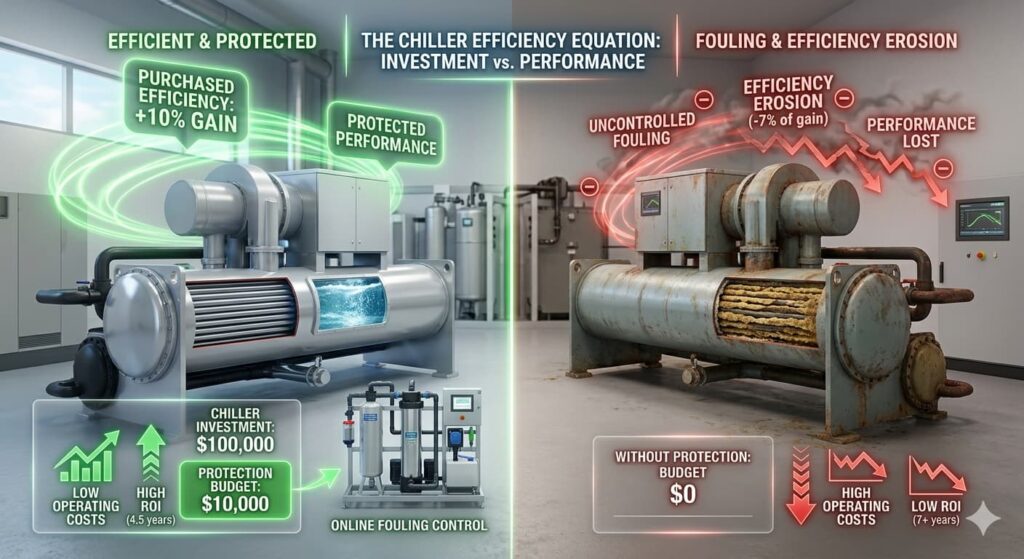
The 10% Rule: Protecting Your Investment
High-efficiency chillers are purchased to reduce energy consumption.
But without controlling fouling, part of that benefit is lost.
A simple way to look at it:
If your chiller can deliver 10% efficiency improvement,
consider allocating 10% of its value to protect that performance.
Example:
- Chiller investment: $100,000
- Protection budget: $10,000
Without protection:
- Efficiency gains erode
- Operating costs increase
- ROI decreases
How to Prevent Fouling-Related Chiller Efficiency Loss
To address fouling effectively, the approach must be continuous: Not reactive, but preventive.
This means:
- Keeping condenser tubes clean during operation
- Preventing buildup instead of removing it later
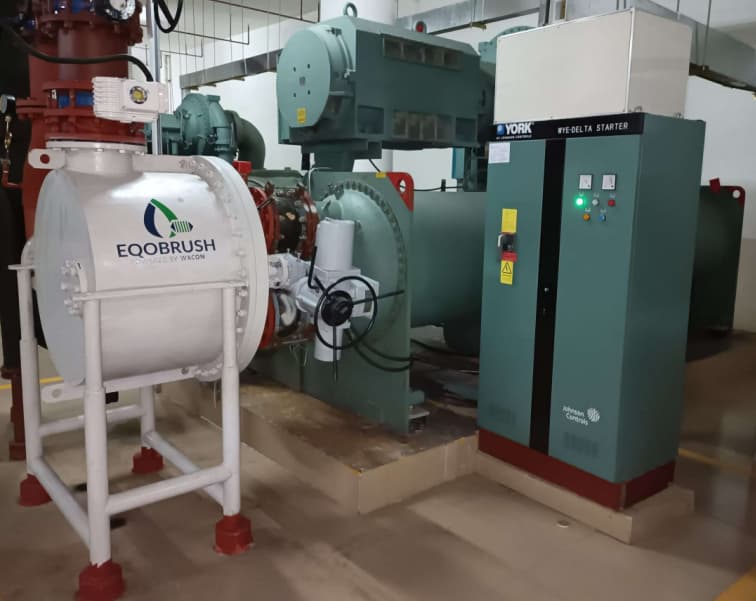
One example of this approach is EQOBRUSH
With continuous cleaning:
- Fouling does not accumulate
- Heat transfer remains stable
- Efficiency remains consistent
Where Monitoring and Cleaning Work Together
Monitoring and cleaning are not alternatives.
They serve different roles:
- Monitoring identifies efficiency loss
- Cleaning prevents one of the major causes
Together, they provide:
- Visibility
- Control
- Stability
Bottom Line
Chiller efficiency loss is not caused by a single issue.
It is the result of system behavior over time.
However:
- Fouling is one of the few causes that is predictable and preventable
Ignoring it means:
- Accepting avoidable efficiency loss
- Increasing operating costs
- Reducing system reliability
Or simply:
You invested in efficiency — but did not protect it.