


The Reality of Chiller Tube Cleaning and Chiller Performance
Chiller tube cleaning, aimed to remove fouling is more than a maintenance headache; it’s an invisible drain on your operational budget. While standard chiller tube cleaning cleaning intervals are the industry norm, they often fail to address the rapid decline in heat transfer efficiency that occurs between service dates.
The Limitations of Manual Intervention
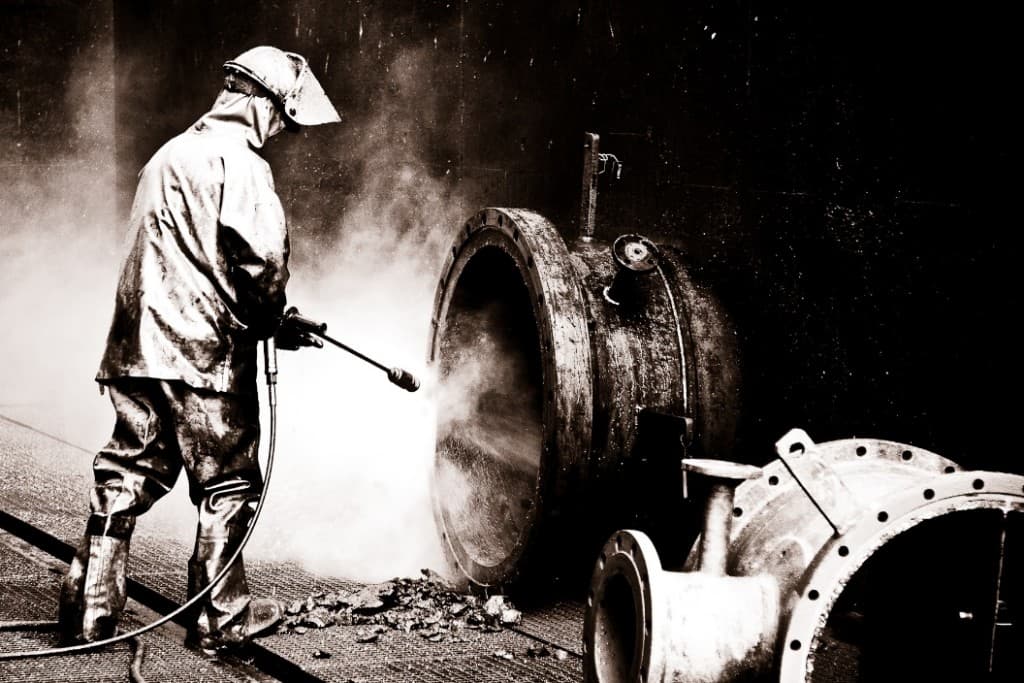
Traditional manual cleaning—mechanical brushing or chemical descaling—offers only a temporary ‘reset’. Within weeks, biofilm and scale begin to re-form. For high-stakes industrial and commercial environments, this intermittent approach results in fluctuating energy costs and unpredictable equipment longevity.
Beyond the Nuisance: The Moral Hazard of Manual Cleaning
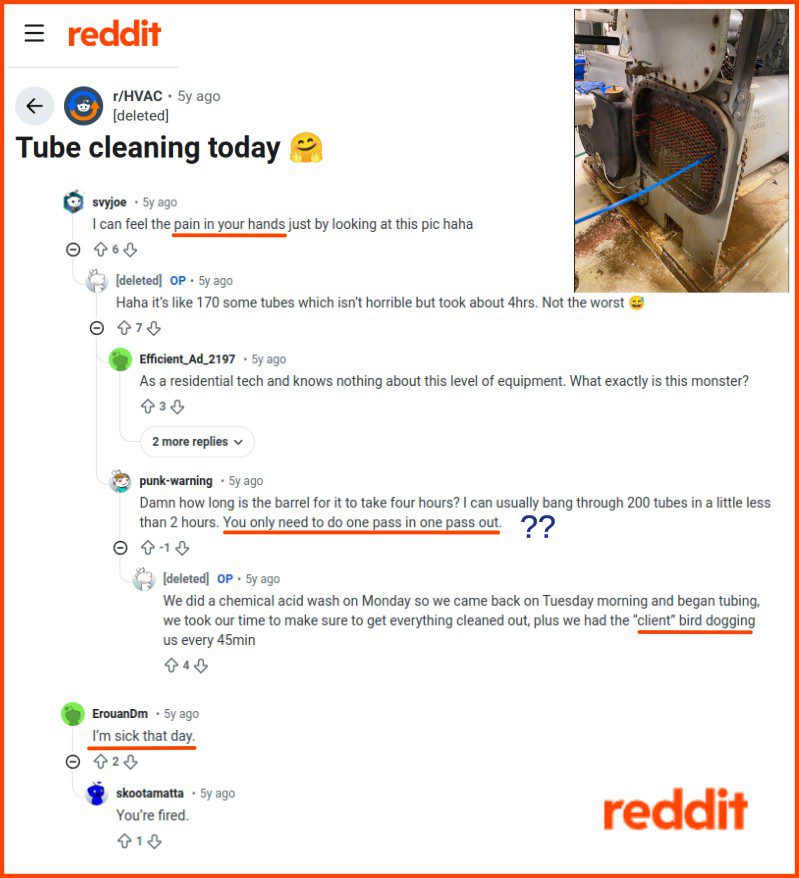
Manual chiller tube cleaning is more than an operational nuisance; it is a classic moral hazard. External contractors are often incentivized by speed rather than precision. When a technician ‘rushes’ through hundreds of tubes to finish early—a common reality documented by industry professionals—they don’t bear the cost of your spiked electricity bills or long-term tube pitting.
This misalignment of interests leaves your efficiency to chance. Between supervisors ‘bird-dogging’ staff to ensure quality and technicians calling in sick to avoid the grueling task, the human element becomes your weakest link. Watco automation eliminates this risk by aligning the maintenance process with your ultimate goal: 100% constant efficiency, without shortcuts or oversight.
The Invisible Erosion of Assets
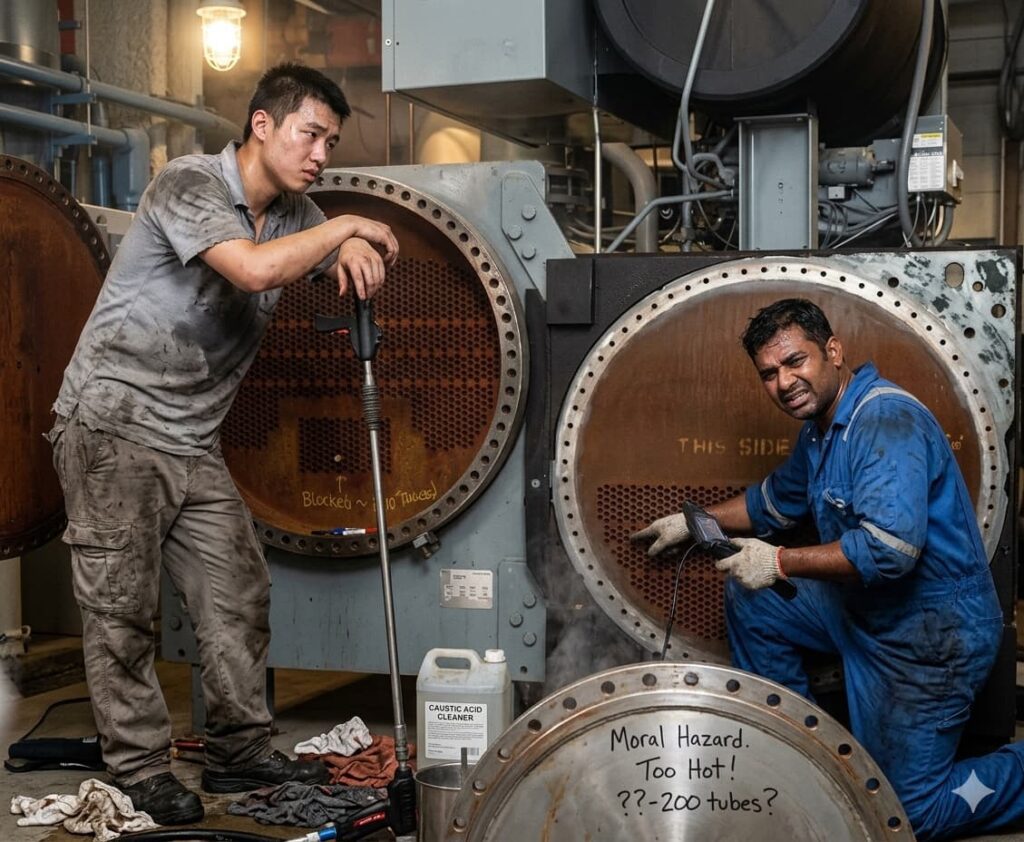
Manual or chemical tube cleaning is often treated as a ‘check-the-box’ exercise, but beneath the surface, it’s a high-risk operation. When you outsource manual cleaning, you are essentially paying for a temporary fix to a permanent problem. The reality of this unwelcome task is that it is rarely performed to the surgical standards your chiller requires.
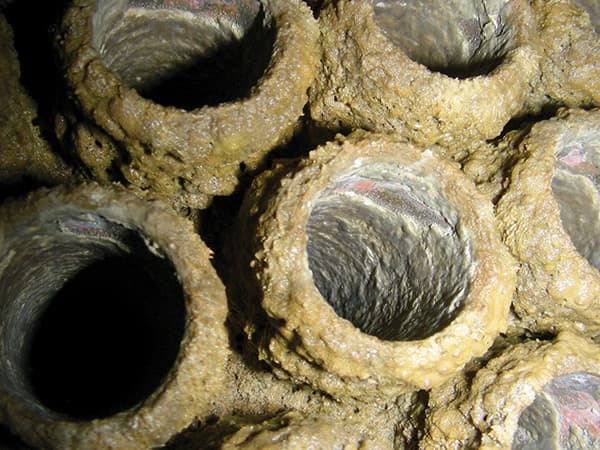

The Three Killers of Chiller Longevity
Standard methods—such as mechanical brushing or high-pressure water jetting—are fundamentally reactive. By the time you schedule your next cleaning service, significant energy loss has already occurred.
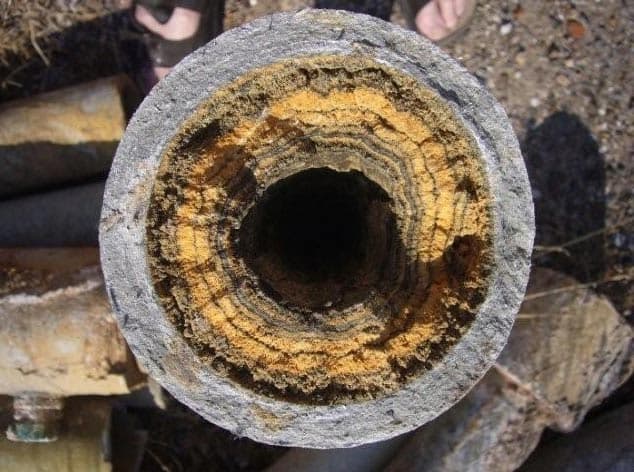
Tube Pitting: between cycles, localized corrosion (pitting) thrives under deposits, permanently damaging your assets.
Chemical Degradation: Frequent chemical treatments stress tube walls and gaskets, shortening the lifespan of the heat exchanger.
The Accountability Gap: Outsourced work is difficult to verify. Who ensures every single tube was reached once the end-plates are closed? What metric do you use to measure the effectiveness. Condenser approach may seem the obvious answer, but the approach is a tricky metric that can easily be manipulated.
The Eddy Current Test: Insurance you hope you never need.
What is an Eddy Current Test?
An Eddy Current Test is a non-destructive electromagnetic inspection used to detect pits, cracks, and wall thinning in chiller tubes. For facilities relying on manual chiller tube cleaning, this test is a mandatory “moment of truth.” It reveals the hidden damage caused by months of fouling and the abrasive chemicals used during service intervals.
Why perform the Eddy Current Test?
Your tubes are vulnerable to under-deposit corrosion. If you only clean manually once or twice a year, you are essentially flying blind between inspections. Most facilities are forced to perform these costly tests every 12-24 months just to monitor the “wall loss” that manual cleaning fails to prevent—or even accelerates.
The Eqobrush Solution:
Stop Detecting Damage. Start Preventing It.
Eqobrush transforms condenser cleaning into a continuous, automated process. By cleaning every four hours—fully integrated and while under load—it eliminates the scheduled cleaning interruptions. Your heat exchanger or condenser performs exactly as engineered, every single day of the year.

Technical Insights: Rethinking Chiller Tube Cleaning
Understanding the difference between manual maintenance and continuous performance is key to reducing your O&M costs. Explore the critical factors of chiller tube cleaning below.
Standard chiller tube cleaning is a reactive compromise. By the time a service team arrives, your facility has already suffered months of increased energy costs and unnecessary strain on the compressor. Our automated systems transition your maintenance from a reactive “snapshot” fix to a continuous state of 100% efficiency, 24/7.
Waiting for scheduled chiller tube cleaning allows deposits to create under-deposit corrosion, leading to irreversible tube pitting. Furthermore, aggressive mechanical brushing and harsh descaling chemicals used in traditional chiller tube cleaning thin the tube walls over time, significantly shortening the lifespan of your heat exchanger.
Why spend your budget on detecting damage when you can prevent it? While an Eddy Current test is essential for aged systems, Automatic Tube Brushing technology keeps tubes in “pristine” condition 24/7. By maintaining a constant 0.000 fouling factor, you don’t just pass the test; you extend the life of your asset and eliminate the anxiety of the next inspection report.
Managing the nuisance of manual chiller tube cleaning involves dangerous chemical handling, confined and hot space entry, and the uncertainty of whether every tube was actually cleaned properly by an external contractor. Automation removes the human element and the associated safety liabilities from your maintenance schedule.
Outsourced chiller tube cleaning is an operational expense with no end date. Investing in automated technology shifts this to a capital improvement with a clear payback period. By eliminating the ‘fouling tax’ on your electricity bill, the system pays for itself while permanently removing the logistical nightmare of manual intervention.