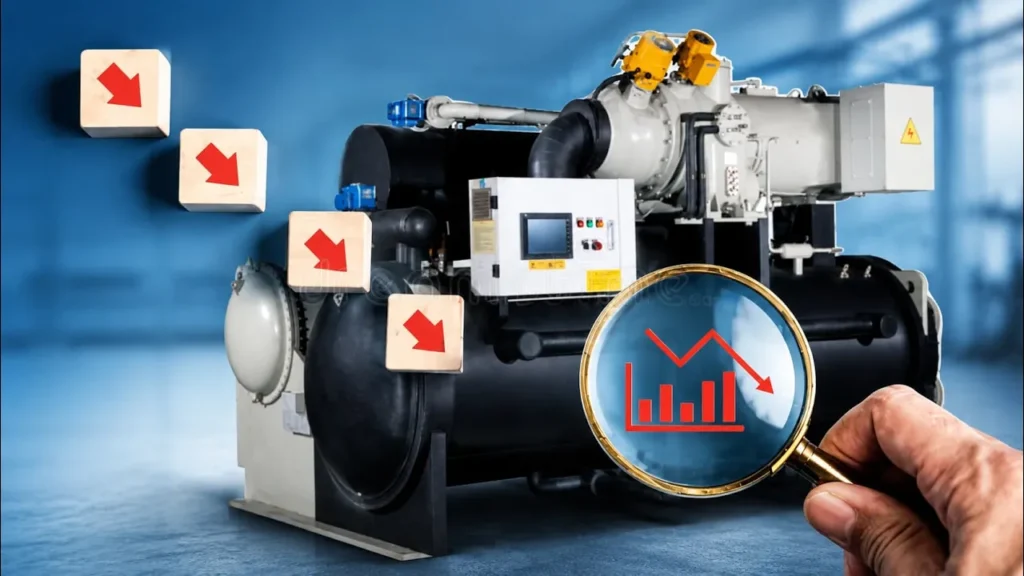


Watco Fundamentals · Part 3
Cooling System Design Conditions: What Engineers Mean — and Why It Matters to You
A cooling system that performs well most of the time may still fail when it matters most. Understanding design conditions is how you know the difference.
A phrase that sounds reassuring — but rarely gets examined
Walk into any end-of-year maintenance review and you’ll hear it: “The system is running at design-condition efficiency.” It sounds like good news. The system is doing what it was designed to do.
But the statement contains a hidden question that almost nobody asks: under which conditions?
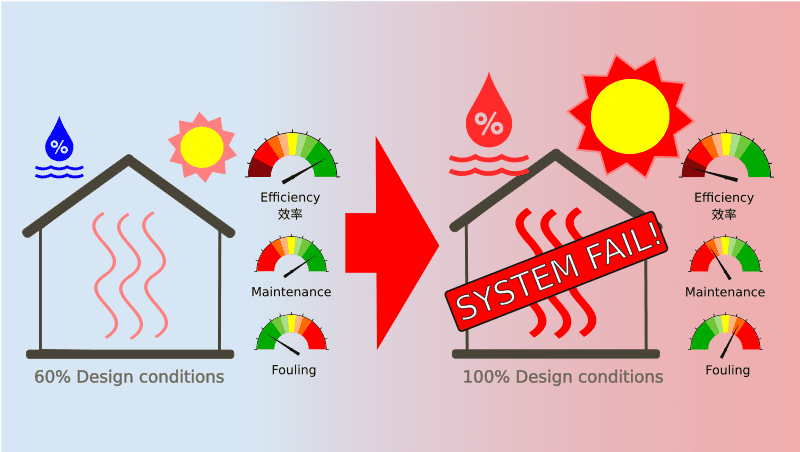
Design conditions are not the conditions your system runs under most of the time. They are the worst-case scenario your system was sized to handle — the peak heat load combined with the highest expected wet-bulb temperature. The combination that only occurs on the hottest, most humid days of the year.
Knowing that changes what “running at design efficiency” actually means.
What cooling system design conditions actually describe
When an engineer specifies a cooling system, they start with a constraint: the system must still operate when conditions are at their worst. For a heat rejection system, that worst case is defined by two factors arriving simultaneously — maximum heat load from the process, and maximum wet-bulb temperature from the environment.
That combined peak is the design condition. Everything else — the chiller capacity, the cooling tower sizing, the condenser surface area — is calculated to meet it.
The critical point is this: design conditions are extreme by definition. They represent the ceiling, not the average. In most climates, a system operates at or near design conditions for only a small fraction of its annual hours. The rest of the time — at 60%, 70%, or 80% of peak load, on milder days — the system has margin to spare.
That margin is not a bonus. It is a buffer. And it is precisely what degradation erodes.
Performance drift: the degradation nobody notices
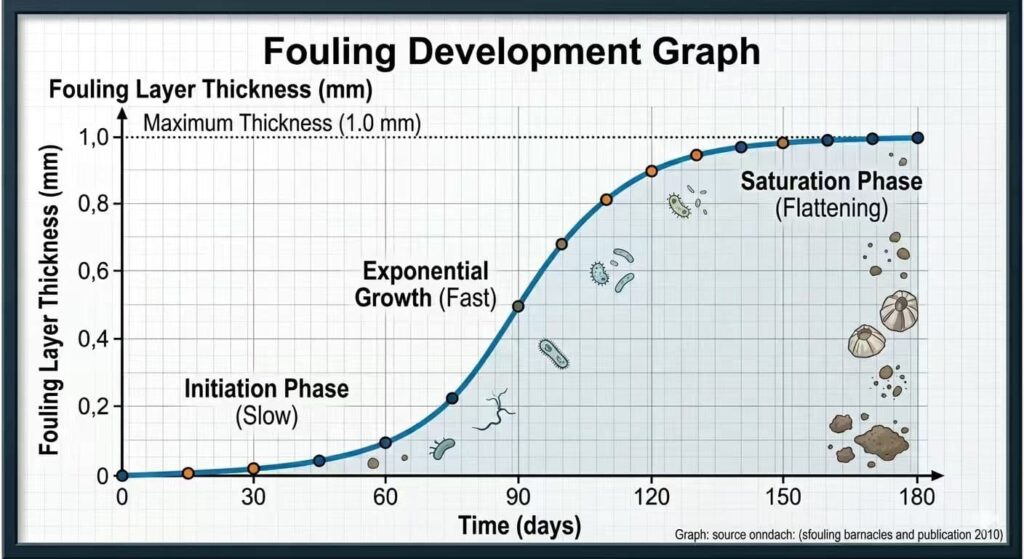
Cooling systems do not fail suddenly. They degrade gradually — fouling accumulates, flow rates drift, tower fill media ages. Each individual change is small. No single day triggers an alarm. But the cumulative effect is a system that requires more energy to do the same work, and has less margin to handle peak demand.
This is performance drift.
The insidious part is that performance drift is nearly invisible during normal operation. A system operating at 60 or 70 percent of design load has enough buffer that even degraded performance still looks acceptable. Temperatures stay within range. Alarms stay quiet. The system appears healthy.
It isn’t. It has simply not been tested yet.

The truck on a hill
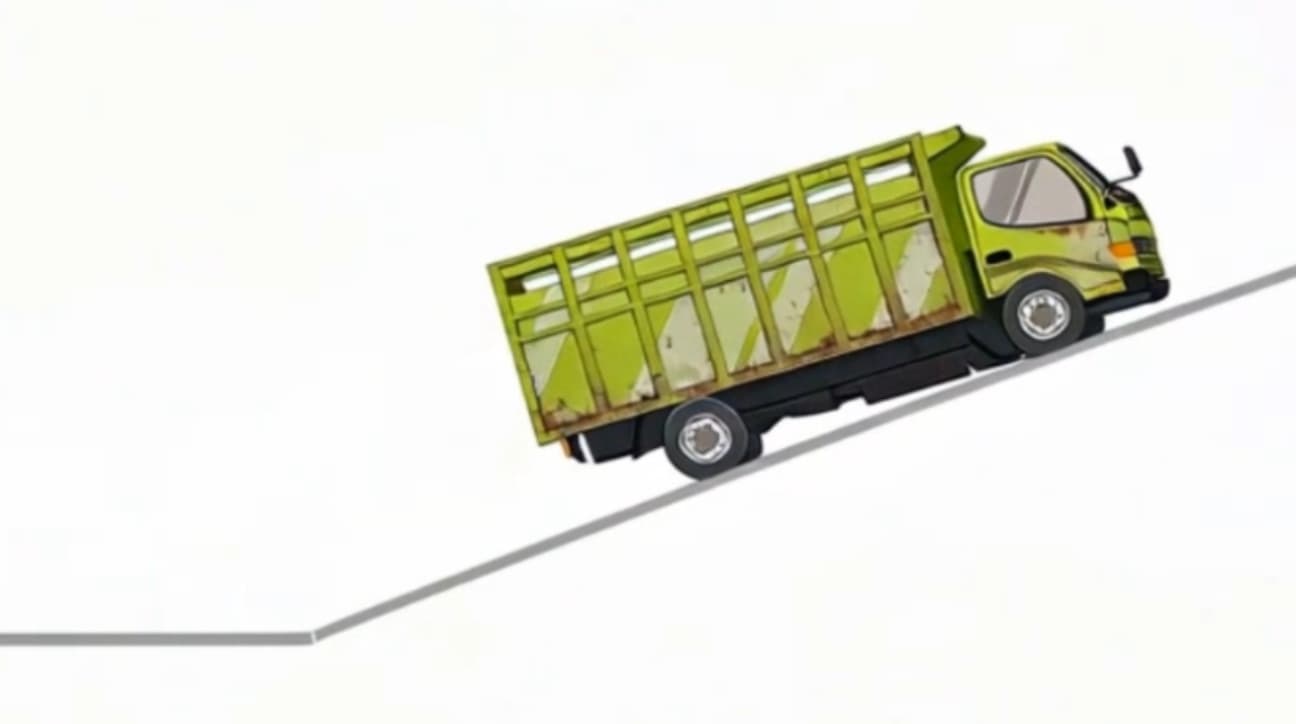
Think of your cooling system as a fully loaded truck.
Most of the time, that truck drives on flat roads. It handles the load comfortably. Even if the engine has lost some power over the years — a little wear here, a little inefficiency there — it still makes reasonable progress. Nothing alarming happens. The driver has no reason to worry.
Then the road reaches a steep hill.
The hill is the design condition: the moment when the full load and the hardest possible conditions arrive together. A well-maintained truck climbs it without issue. A truck that has been quietly degrading — that ran fine on flat roads for years — may not make it up. Not because the hill is unreasonable. It was always going to be there. But because the operational margin needed to climb it has gradually disappeared.
The failure at the hill is not a sudden event. It is the accumulated result of every unnoticed loss along the flat road.
Why “running at design efficiency” can be a warning sign
Here is the counterintuitive part that the maintenance review rarely surfaces.
A healthy cooling system running at true design conditions — maximum load, maximum wet-bulb — will always show a lower COP than the same system running on a mild day at partial load. This is simply physics: harder conditions demand more compressor work relative to cooling output.
So when a system reports that it is “running at design-condition efficiency” while operating below design conditions, something is wrong. The system is consuming as much energy as it would under peak stress — but peak stress has not arrived. It has used up its margin early.
When the real design conditions do arrive — on the hottest afternoon of the year, when the process is at full load — the degraded system has nothing left.
Design efficiency reached too early is not a success. It is a warning.
What this means for how you manage your plant
Good cooling system management is not about whether the system is working today. It is about whether it will still work when conditions are at their worst. The only way to know that is to understand how much margin the system currently has — and to protect that margin from being quietly eroded over time.
A system operating close to its designed state has margin when it needs it. When the hottest day of the year arrives, it climbs the hill. A system that has been allowed to drift — even one that looks fine today — may not.
The question to ask is not: is it running? It is: how much margin does it have left?
Where performance drift comes from — and why it is hard to see
Performance drift is not a single problem with a single cause. It accumulates across every subsystem in the cooling chain.
Condenser tube fouling is one contributor — scale, biofilm, and silt insulate the heat transfer surface and force the compressor to work harder. But drift also originates in compressor efficiency losses, evaporator degradation, refrigerant cycle deviations, cooling tower performance, and condenser water flow and quality. Any of these can silently erode the system’s operating margin without triggering an alarm.
The deeper problem is that standard monitoring does not reveal this. Your BMS or SCADA system likely shows COP, temperatures, and flow rates in real time. That provides visibility — but not understanding. COP changes with operating conditions, which makes it nearly impossible to tell whether a given reading represents good performance or quiet degradation. The underlying causes remain invisible.
For a technical overview of heat rejection methods and how each affects condenser performance, see CEDengineering.com, Course M04-029
What is needed is not more data. It is data that is made actionable — performance expressed relative to what the system should theoretically achieve under the same conditions, with the ability to trace any gap back to the subsystem responsible.
Knowing where you stand
This is the gap that performance monitoring closes. By expressing actual efficiency as a proportion of the theoretical maximum — rather than as an absolute COP value — it becomes possible to compare performance across different operating conditions, different days, and different machines using a consistent benchmark. Drift that would be invisible in raw COP data becomes visible as a trend.
When that kind of monitoring is in place, the question how much margin does this system have left? becomes answerable. And when the answer changes, the subsystem responsible can be identified — whether that is a fouled condenser, a degrading compressor, a cooling tower running below capacity, or a refrigerant cycle that has drifted from specification.
That is what design conditions are really about: not a rating on a datasheet, but a test the system will face on the worst day of the year. The preparation for that test happens in every other day that passes — in whether the system’s margin is being monitored, understood, and protected.
Find out how much margin your system has left.
EQOCHECK makes chiller performance drift visible and actionable — across all subsystems, independent of load and operating conditions.
This article is part of the Watco Fundamentals series.
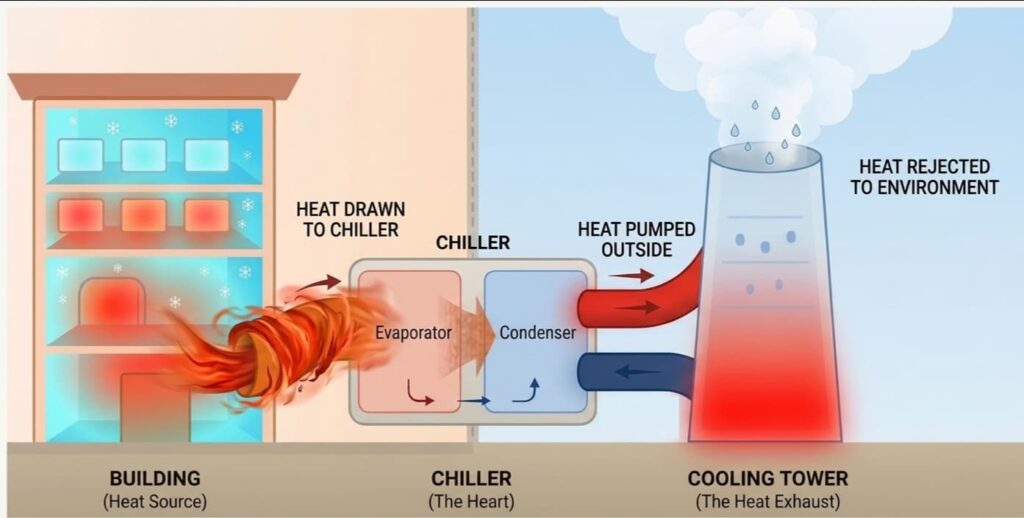
What is Cooling? | F01
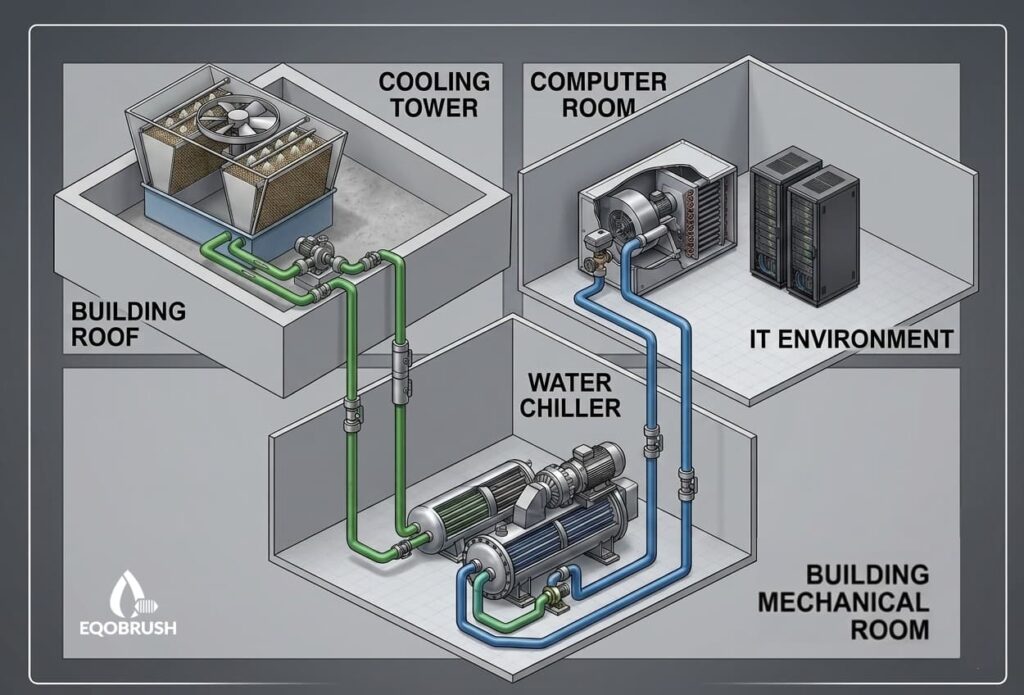
Heat Removal in Cooling Systems | F02
What are Heat Rejection Design Conditions | F03
Condenser Fouling Process | F04