


Green Ammonia Energy Efficiency
Why Condenser and Absorption Chiller Performance Matter in Green Fertilizer Production Efficiency
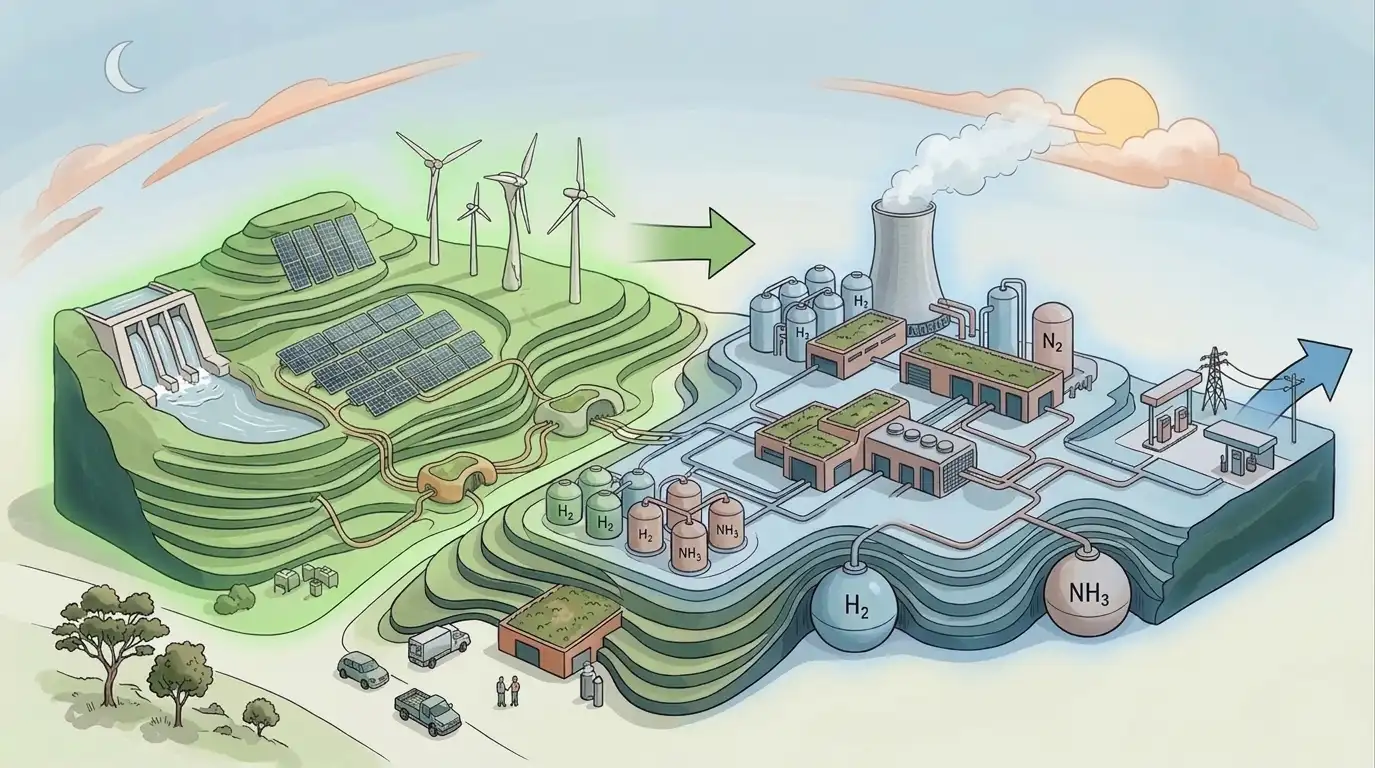
The global ammonia industry is entering a period of transition. Traditionally, ammonia production has been concentrated in regions with abundant and low-cost natural gas supplies. However, geopolitical instability, energy security concerns, and the increasing push toward electrification are accelerating investments in green ammonia production and alternative fertilizer manufacturing strategies.
As ammonia plants move away from traditional gas-producing regions and increasingly rely on renewable electricity, energy efficiency in ammonia production becomes far more critical. Electricity-based ammonia production places stronger emphasis on operational efficiency, process optimization, and minimizing avoidable energy losses throughout the cooling system.
In parallel, many ammonia and fertilizer facilities are also investigating opportunities to recover and reuse waste heat through absorption chillers. In these systems, cooling efficiency remains strongly dependent on condenser and cooling water performance.
This article is intended for:
- Green ammonia projects
- Fertilizer manufacturing
- Energy efficiency in ammonia production
- Industrial cooling optimization
- Absorption chiller applications
- Industrial condenser performance optimization
Table of Contents
- 1. The Shift Toward Green Ammonia
- 2. Why Energy Efficiency Becomes More Important
- 3. Cooling Systems and Hidden Efficiency Losses
- 4. Condenser Fouling in Ammonia Plants
- 5. Absorption Chillers in Fertilizer Production
- 6. How EQOBRUSH Supports Energy Efficiency
- 7. Long-Term Operational Benefits
- 8. Conclusion
01
The Shift Toward Green Ammonia
The ammonia industry has historically been tied to regions with access to inexpensive natural gas. Today, that model is gradually changing. Countries are exploring green ammonia and electrification-based fertilizer production as part of broader energy diversification strategies.
In many new projects, hydrogen is generated through electrolysis using renewable electricity. This significantly changes the economics of the process. When electricity becomes the dominant energy input, every percentage of avoidable energy loss matters.
As a result, energy efficiency in fertilizer production is receiving increased attention. Cooling performance, compressor efficiency, heat exchanger performance, condenser cleanliness, and process optimization are no longer secondary considerations. They directly influence operating cost and plant competitiveness.
In a green ammonia plant, the smokestack becomes less important, while the cooling tower becomes more important.
02
Why Green Ammonia Energy Efficiency Becomes More Important
The Haber-Bosch ammonia production process remains one of the most energy-intensive industrial processes in the world. Even in modern plants, large amounts of energy are required for hydrogen production, gas compression, synthesis loop circulation, and process cooling.
In conventional ammonia plants located near gas fields, energy cost structures are different. In electrification-based ammonia production, electricity consumption can become one of the dominant operational costs.
Even relatively small reductions in condenser performance can increase compressor lift and power consumption significantly. For large-scale green ammonia production, these losses can accumulate into substantial operational penalties over time.
At the same time, many facilities are now evaluating ways to recover thermal energy from the process itself. This creates additional interest in technologies such as absorption chillers, where reliable heat rejection and stable condenser operation are equally important.
Key focus areas include:
- Compressor efficiency
- Condenser performance
- Heat exchanger cleanliness
- Cooling water quality
- Predictive maintenance
- Stable process temperatures
- Waste heat recovery opportunities
- Cooling Tower performance
03
Cooling Systems and Hidden Efficiency Losses
Many industrial cooling systems gradually lose efficiency due to fouling inside condensers and heat exchangers. The process is often slow enough that performance degradation becomes accepted as “normal operation.”
Operators may compensate by increasing cooling tower fan speed, raising pumping rates, or operating additional equipment. However, these actions often increase energy consumption further. For facilities focused on energy efficiency in ammonia production, maintaining optimal condenser performance becomes increasingly important.
In ammonia and fertilizer plants, fouling causes:
- Higher compressor discharge pressures
- Increased energy consumption
- Reduced cooling capacity
- Lower process stability
- Increased maintenance intervals
- Reduced absorption chiller performance

04
Condenser Fouling in Ammonia Plants
Water-cooled condensers are highly effective, but they remain vulnerable to scaling, biofouling, and debris accumulation. Even thin fouling layers can reduce heat transfer efficiency substantially.
Traditional offline cleaning methods require shutdown planning, labor, and production interruptions. In continuous industrial processes such as fertilizer production, operators increasingly prefer solutions that maintain performance continuously instead of periodically restoring lost performance.
For absorption chillers, condenser fouling can become even more problematic because these systems are highly dependent on stable heat rejection conditions. A poorly performing condenser can reduce cooling output and negatively affect the overall energy balance of the installation.
Particularly relevant in:
- Coastal facilities
- Areas with challenging water quality
- High ambient temperature regions
- Plants using recycled process water
- Facilities operating absorption chillers
05
Absorption Chillers in Fertilizer Production
As the fertilizer industry searches for ways to improve overall plant efficiency, absorption chillers are receiving renewed attention. Unlike conventional electric chillers, absorption chillers can utilize waste heat or steam from the process itself to generate cooling capacity. In ammonia and fertilizer plants, this creates opportunities to recover energy that would otherwise be rejected.
However, the effectiveness of absorption chillers remains strongly linked to cooling water conditions and condenser performance. This creates a double opportunity for energy optimization: improving condenser efficiency in conventional cooling systems and supporting stable and efficient operation of absorption chillers.
In both cases, maintaining clean condenser tubes plays a direct role in supporting long-term plant efficiency.
Poor condenser efficiency can lead to:
- Reduced absorption chiller capacity
- Higher cooling water temperatures
- Lower process stability
- Reduced heat recovery effectiveness
- Higher overall operating cost
- Increased crystallization risk inside the absorption chiller
06
How EQOBRUSH Supports Energy Efficiency in Fertilizer Production
EQOBRUSH is an automatic online tube cleaning system designed for water-cooled condensers and heat exchangers. The system continuously circulates cleaning brushes through condenser tubes during normal operation. This helps prevent fouling accumulation before major efficiency losses occur.
Rather than focusing on “recovering” lost performance after fouling develops, the philosophy is to maintain condenser cleanliness continuously. In electrification-based plants and waste-heat recovery systems, this contributes directly to improved energy efficiency in ammonia production and energy efficiency in fertilizer production.
In lithium bromide absorption chillers, inadequate condenser cooling performance can contribute to salt crystallization inside the machine. Once crystallization occurs, recovery can become difficult, time-consuming, and expensive. In severe cases, the absorption chiller may require extensive cleaning procedures and prolonged downtime.


Maintaining stable condenser performance and reliable cooling water conditions therefore becomes essential not only for efficiency, but also for protecting the absorption chiller itself against crystallization-related operational problems.
For facilities operating large absorption chillers in fertilizer production environments, avoiding a crystallization event can prevent significant operational disruption and maintenance cost.
This creates a double opportunity for energy optimization:
- Improving condenser efficiency in conventional cooling systems
- Supporting stable and efficient operation of absorption chillers
In both cases, maintaining clean condenser tubes plays a direct role in supporting long-term plant efficiency.
Primary advantages for green ammonia and fertilizer facilities:
- More stable condenser performance
- Lower compressor energy consumption
- Reduced need for chemical cleaning
- Reduced maintenance interruptions
- Improved absorption chiller efficiency
- Improved long-term operational consistency
07
Long-Term Operational Benefits
As ammonia production becomes increasingly linked to renewable electricity and decentralized energy infrastructure, operational stability gains importance. For EPC contractors and plant owners, cooling system optimization is becoming part of broader energy strategy discussions rather than only maintenance planning.
Efficient cooling systems can support:
- Lower specific energy consumption
- Reduced operational variability
- Improved equipment lifetime
- Better return on electrical infrastructure investments
- Improved waste heat utilization
- Reduced lifecycle operating costs
08
Conclusion
The shift toward green ammonia production is not only changing how ammonia is produced, but also how efficiency is evaluated throughout the plant.
As production moves beyond traditional gas-rich regions and becomes increasingly electricity-driven, minimizing avoidable energy losses becomes more important. At the same time, the growing interest in absorption chillers and waste heat recovery creates additional opportunities to improve overall plant efficiency.
Maintaining condenser efficiency is therefore no longer only a maintenance topic. It becomes part of the broader energy strategy of modern fertilizer production. In that context, technologies such as EQOBRUSH can contribute to more stable condenser operation, improved absorption chiller performance, and more energy-efficient ammonia and fertilizer production facilities.